
FCL vs. LCL: How to Choose the Right Ocean Freight Option
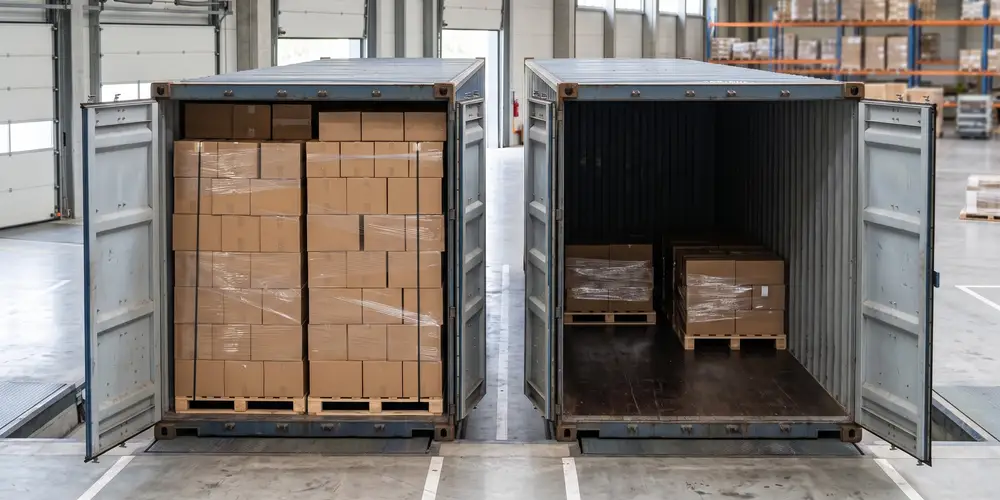
Choosing between Full Container Load (FCL) and Less than Container Load (LCL) is not simply a question of whether your cargo fills a container. The right choice depends on the packed cargo, handling risk, supplier readiness, origin costs, destination charges, and final-delivery conditions.
LCL means your cargo is consolidated with other shipments. FCL means one shipper books the container, although weight limits, cargo compatibility, carrier rules, and equipment availability still apply.
Quick Comparison
| Decision factor | LCL | FCL |
|---|---|---|
| Space | Shared container | Container booked for one shipment |
| Origin handling | Cargo enters a consolidation facility | Container loading is planned for the booked shipment |
| Destination handling | Cargo is separated at a container freight station | Container moves as a unit until unloading or devanning |
| Best starting point | Smaller commercial volumes or product tests | Larger, recurring, fragile, bulky, or handling-sensitive orders |
| Main risk | More handling and shared-container dependencies | Paying for unused space or facing container delivery constraints |
| Quote comparison | Include CFS and destination charges | Include container, drayage, chassis, unloading, and return conditions |
The U.S. Federal Maritime Commission describes LCL cargo as cargo for which the carrier is responsible for container packing and/or unpacking. That extra consolidation activity is one reason LCL should not be compared with FCL using only an ocean rate. See the FMC tariff terminology.
When LCL Makes Sense
LCL can be the practical choice when:
- The shipment is not large enough to justify a container.
- You are testing a new product or supplier.
- Working capital matters more than shipping the largest possible batch.
- Several supplier orders are being combined into one moderate-sized shipment.
- The cargo is properly packed for shared-container handling.
- The delivery deadline allows for consolidation and deconsolidation.
LCL is not automatically cheap. A quote may include origin receiving, consolidation, documentation, minimum charges, destination CFS handling, customs, and final delivery. Large but light cartons can also occupy more chargeable space than the importer expects.
When FCL Makes Sense
FCL becomes more attractive when:
- The combined shipment occupies a substantial share of a container.
- Orders repeat monthly or quarterly.
- Fragile, high-value, bulky, or non-stackable cargo benefits from fewer shared handling points.
- Several suppliers can be coordinated into a single loading plan.
- The consignee can receive or unload a container.
- The total FCL cost is competitive after all origin and destination costs are included.
FCL does not eliminate operational conditions. The destination may need space for a truck and container, unloading labor, a dock or forklift, and a plan to complete unloading within the allowed time. Failed appointments, waiting, chassis, storage, demurrage, detention, or redelivery may be outside a basic quote unless specifically included.
There Is No Universal CBM Crossover Point
You may see advice saying that FCL always becomes cheaper at a fixed number of cubic meters. Treat that number as a rough screening tool, not a booking rule.
The real crossover changes with:
- Origin city and pickup count
- Container and LCL rates at the time of booking
- Cargo density and stackability
- Long, heavy, or oversized pieces
- Destination port and postcode
- Customs and destination handling
- Residential, commercial, FBA, or 3PL delivery
- Unloading and appointment requirements
Ask for both options when the shipment is near the likely crossover range. The comparison should use the same cargo data and the same delivery scope.
How to Compare LCL and FCL From 10 to 45 CBM
Shipments between 10 and 45 CBM deserve a side-by-side comparison, but these figures are review bands—not automatic mode-selection rules. Container type, internal dimensions, payload, loading efficiency, long pieces, stackability, current rates, destination handling, and unloading conditions can change the result.
| Packed volume | Practical starting review | Why the answer can change |
|---|---|---|
| About 10–15 CBM | Build a complete LCL quote, then screen FCL where handling risk or destination CFS costs are high | Minimum charges, non-stackable space, fragile cargo, or expensive destination handling may narrow the difference |
| About 15–25 CBM | Request comparable LCL and FCL scopes | This range can be sensitive to current container rates, cargo density, supplier pickups, and final delivery |
| About 25–35 CBM | Test actual container fit and total FCL cost closely | Nominal CBM does not show whether long or awkward pieces load efficiently or whether weight limits apply |
| About 35–45 CBM | Treat container planning as a central option, while still checking fit and destination constraints | A quoted CBM can fit poorly, exceed operational limits, or require a container and delivery method different from the first assumption |
Do not interpret the table as saying that 15, 25, or 35 CBM is a universal crossover point. At any volume, compare the packed shipment and the same final destination.
Compare Total Door-to-Door Cost
Use two complete cost paths instead of comparing an LCL rate per CBM with an FCL ocean rate:
| Cost area | LCL comparison | FCL comparison |
|---|---|---|
| China origin | Pickups, receiving, storage, measurement, consolidation, export and origin CFS | Pickups, loading location, container positioning, loading labor, export and origin terminal |
| Main transport | Chargeable volume or weight, minimums and ocean freight | Container rate, equipment type and applicable carrier charges |
| Destination | Deconsolidation, CFS, release and local handling | Port/terminal, chassis, drayage, container use and return conditions |
| Customs | Importer, brokerage, bond, duties, taxes and possible agency requirements | Compare the same importer and customs scope |
| Final delivery | Pallet or loose-cargo delivery, address and accessorial services | Live unload, drop, devanning, warehouse transfer or separate final-mile delivery |
| Conditional exposure | Remeasurement, storage, examination, waiting and redelivery | Examination, demurrage, detention, chassis, waiting, unloading and redelivery |
The lower total is not always the better operational choice. Fewer handling points may matter more for fragile cargo, while LCL can protect working capital when a larger order is unnecessary.
How Multi-Supplier Orders Change the Decision
If five suppliers quote their orders separately, the importer may never see the true combined volume. A consolidation plan makes it possible to compare:
- Separate air or LCL shipments.
- One consolidated LCL shipment.
- One FCL shipment with coordinated loading.
But consolidation is not automatically beneficial. Suppliers may finish weeks apart, cargo may be incompatible, or storage and extra pickups may offset the savings. Read our multi-supplier consolidation guide before deciding.
Cargo That Needs More Than a CBM Estimate
Do not choose LCL or FCL from total volume alone when the shipment includes:
- Long or heavy individual pieces
- Furniture, fixtures, equipment, or building materials
- Non-stackable pallets
- Fragile goods
- Wood packaging
- Batteries, liquids, powders, food, feed, or regulated products
- High-value cargo that may require insurance
For these shipments, provide the largest piece, heaviest piece, packing method, photos, and destination unloading conditions. See our bulky commercial cargo checklist.
Compare the Same Written Scope
Before choosing, ask both quotes to identify:
- China pickup and warehouse handling
- Export documentation and origin charges
- Main ocean freight
- Customs brokerage arrangement
- Duty and tax treatment
- Destination CFS or port charges
- Final delivery type
- Residential, remote, appointment, liftgate, waiting, or unloading services
- Quote validity and shipment-dependent exceptions
A lower line-haul number is not a lower landed logistics cost if the quote stops at the port or excludes handling that the other option includes.
Decision Checklist
For a completed example, see our 56 CBM furniture shipment from Zhejiang to Virginia. It used a 40HQ ocean container, followed by destination warehouse devanning and liftgate truck delivery; the final delivery vehicle was separate from the ocean container.
Choose LCL as the starting point when the shipment is smaller, properly packed for shared handling, and the full destination scope remains competitive.
Request an FCL comparison when the shipment is larger or recurring, involves several suppliers, contains handling-sensitive cargo, or is approaching container economics.
The final decision should be based on packed cargo and a common delivery scope—not a generic internet threshold.
FCL and LCL Questions Importers Ask
Why is a forwarder recommending LCL for a large shipment?
There may be a valid reason, such as poor container fit, supplier timing, destination constraints, or a favorable current LCL channel. Ask for an FCL comparison using the same cargo, importer, customs, and delivery scope. The recommendation should be explainable without hiding destination charges.
Does FCL mean the container arrives at my address?
Not necessarily. The container may be delivered for live unloading, dropped under agreed terms, or moved to a warehouse for devanning before a separate truck completes delivery. Confirm the actual destination plan and container-return responsibility.
Should a growing importer switch permanently from LCL to FCL?
Not based on one shipment. Review order frequency, inventory needs, packed volume, handling risk, rates, supplier readiness, and receiving capability for each booking. A business can use both modes for different replenishment cycles.
Shipping to the United States? Review our China-to-USA freight options or request a detailed quote with pieces, dimensions, weight, supplier count, postcode, and delivery conditions.