
A First-Time Importer's Checklist for Air Freight from China
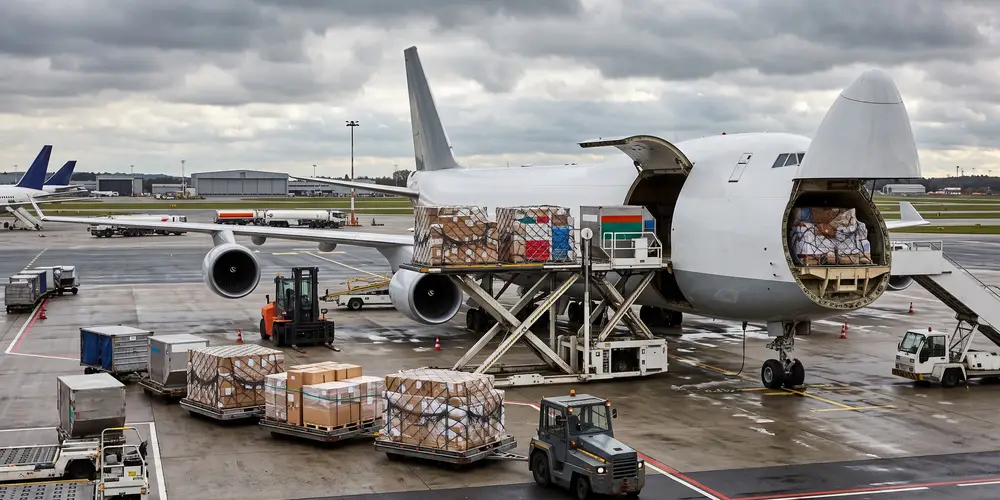
Before requesting a first commercial air-freight quote from China, prepare an accurate product description, final packed dimensions and weight, cargo attributes, invoice and packing list, importer arrangement, delivery postcode, and unloading conditions. Those facts determine airline acceptance, chargeable weight, customs review, and final-delivery feasibility.
Air freight is not confirmed from a product name and total weight alone. Airlines, handlers, customs brokers, and final-mile carriers make decisions from the actual packed shipment.
1. Describe the Product Accurately
Prepare the commercial product name, material or composition, intended use, brand status, country of origin, value, and HS/HTS information if known. Avoid descriptions such as “parts,” “samples,” or “accessories” without explaining what the goods actually are.
Tell the forwarder whether the cargo contains batteries, magnets, liquids, powders, chemicals, food, wood, pressurized items, or other regulated attributes. Acceptance and documentation can change by airline and route.
2. Provide Packed Measurements
Air freight is commonly assessed using both actual and volumetric weight. Provide:
- Number of pieces
- Packed length, width, and height of each package type
- Actual weight
- Largest and heaviest piece
- Packaging type and stackability
Do not quote from product dimensions before final packaging. Large but light cartons can produce a much higher chargeable weight.
3. Prepare the Commercial Documents
A commercial shipment commonly needs a commercial invoice and packing list with consistent descriptions, quantities, values, weights, and parties. Other documents depend on the product, origin, destination, and agency requirements.
Importer Security Filing (ISF) is associated with covered cargo arriving in the United States by vessel; it should not be presented as a standard air-freight document. The customs broker should confirm the entry and agency documents for the actual shipment.
4. Confirm the Importer and Customs Arrangement
For the United States, identify the Importer of Record and whether a customs bond or other importer setup is required. A licensed customs broker can file customs entry, but the importer remains responsible for accurate product, value, classification, and compliance information. See CBP guidance for new importers.
5. Choose the Service From the Real Deadline
“Air freight” can describe several service levels and handling models. Ask for:
- Airport-to-airport or door-to-door scope
- Direct or connecting itinerary
- Cargo cutoff and flight availability
- Customs and destination handling
- Final delivery conditions
- Whether timing is an estimate or a committed service level
Do not publish or rely on a generic transit-time promise for every origin, product, and postcode.
6. Confirm Final Delivery
Provide the destination postcode and specify whether delivery is to a commercial dock, 3PL, FBA facility, construction site, or residence. Confirm appointment, liftgate, forklift, truck access, manual unloading, and receiving hours.
7. Ask About Cargo Insurance
Carrier liability may be limited and should not be confused with cargo insurance for full commercial value. For fragile or high-value cargo, request insurance separately and review the insured value, exclusions, deductible, packaging conditions, and claim documentation.
Read cargo insurance versus carrier liability before assuming that a door-to-door price includes full-value protection.
8. Review the Written Quote
The quote should identify origin pickup, export handling, main air transport, customs arrangement, duty and tax treatment where applicable, destination handling, final delivery, validity, and shipment-dependent exceptions.
First-Time Air Freight Questions
Can I get an air-freight quote before final packing?
Yes, but treat it as a planning estimate. Final cartons, gross weight, chargeable weight, cargo attributes, and current flight availability must be confirmed before booking.
Does a supplier’s airport price include delivery to my address?
Not unless the written scope says so. Compare airport, destination handling, customs, duty treatment, and final delivery on the same named destination and address conditions.
Do cartons, pallets, or wooden crates change air-freight cost?
Yes. Packaging changes final dimensions, gross weight, handling-piece count, stackability, and sometimes cargo acceptance. Use the bulky cargo packaging guide before asking the factory for a final packing method.
Use our freight quote checklist or request an air-freight review with accurate packed measurements and destination conditions.